Do You Need a Car in Australia? Driving, Distances and Domestic Flights Explained

Every week someone lands in Sydney planning to drive to Cairns for the weekend. Sydney to Cairns is 2,400 kilometres. That is London to Moscow, or New York to Denver, and there is not much in between. Understanding the scale of Australia is the difference between a trip that flows and one spent staring at the Bruce Highway.
Stralya is reader-supported. Some links in this guide go to booking partners and may earn us a small commission at no extra cost to you. We only link to things we would book ourselves.
The rule: fly between cities, drive within regions
Australia's population clings to the coast in a handful of cities separated by enormous distances. Domestic flights are frequent and, booked ahead, reasonably cheap. A hire car is superb for exploring around a place and a poor way of getting between places. The itineraries that work best pair a flight into a region with a few days of driving once you arrive.
Real distances, real driving times
Sydney to Melbourne: 880 km, about 9 hours on the Hume Highway. Flight: 1 hour 25 minutes.
Sydney to Brisbane: 920 km, 10 to 11 hours. Flight: 1 hour 30 minutes.
Melbourne to Adelaide: 730 km, 8 hours. Flight: 1 hour 20 minutes.
Brisbane to Cairns: 1,700 km, 20 hours over two or three days. Flight: 2 hours 20 minutes.
Adelaide to Perth: 2,700 km across the Nullarbor, 30 hours of driving. Flight: 3 hours 20 minutes.
Alice Springs to Uluru: 450 km, 5 hours. Most people fly straight into Uluru instead.
Where you genuinely need a car
The Great Ocean Road from Melbourne. It is a driving route; that is the whole point. Two days minimum.
Tasmania. Public transport is thin and the best of the island is between the towns.
The Barossa, Margaret River, Hunter Valley and other wine regions. Cellar doors are spread out. Consider a tour if you intend to taste properly.
Kangaroo Island, the Grampians, the Blue Mountains beyond Katoomba. Anywhere the attraction is landscape rather than a town.
Queensland's coast north of Brisbane if you want to stop at the small places rather than just the airports.
Where a car is a liability
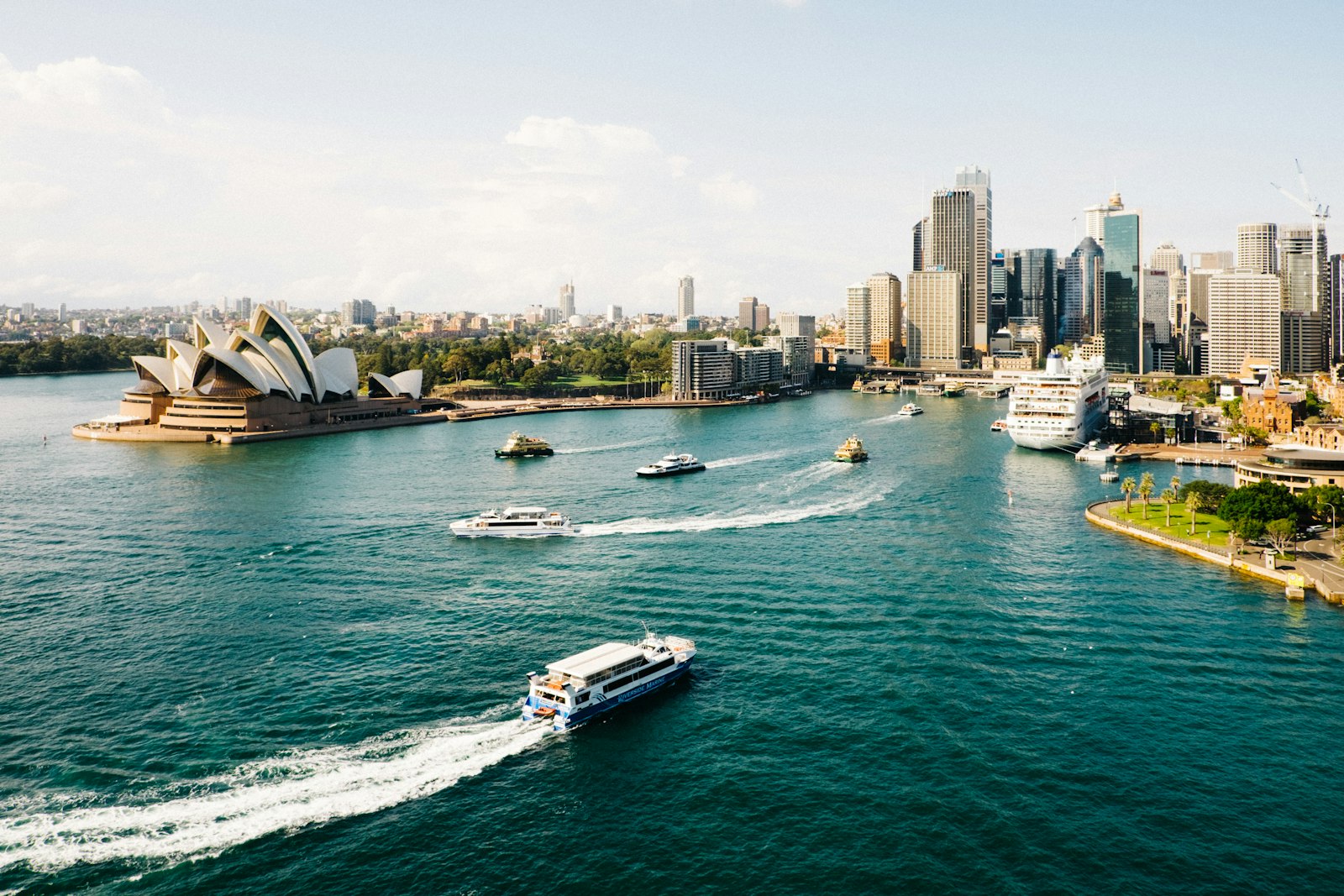
Sydney. Parking is scarce and expensive, tolls add up fast, and the ferries and trains are part of the experience. Tap a credit card on the reader and you are done.
Melbourne's inner city. Trams, hook turns and a Free Tram Zone in the CBD. Pick up a car only on the day you leave for the Great Ocean Road.
Uluru. Fly in, use the resort shuttle and book tours. There is one road.
Cairns and Port Douglas for reef trips. Boats leave from the marina; operators run pickups from most accommodation.
Driving on the left: what actually catches people out
If you are from the UK, Ireland, Japan, India, Singapore, South Africa or New Zealand, you already drive on the left and the transition is trivial. For everyone else, the first fifteen minutes are the hard part, and the moment that catches most people is turning out of a car park or petrol station onto an empty road, where there is no traffic to copy. Say it out loud: stay left.
Roundabouts go clockwise. Give way to traffic already on the roundabout, which comes from your right.
Speed limits are enforced hard. Cameras are everywhere and tolerances are small. 50 km/h in built-up areas, 100 or 110 on highways, 40 around schools at set times.
Drink-driving limit is 0.05. Random breath testing is routine and unexceptional. Do not chance it.
Seatbelts for everyone, no phone in hand. Fines in the hundreds of dollars.
Melbourne's hook turn. At certain CBD intersections you turn right from the left lane. There are signs. It is fine.
Licences, insurance and hire
A valid overseas licence in English is accepted for temporary visitors in every state. If your licence is not in English, carry an International Driving Permit or a certified translation alongside it. Most hire companies require drivers to be 21 or over and charge a young-driver surcharge under 25.
Hire cars come with basic cover and a large excess, typically A$3,000 to A$5,000. Reducing it at the counter is expensive; a standalone excess-reduction policy or travel insurance with hire-car excess cover is usually far cheaper. Read the exclusions: many standard hire agreements void cover on unsealed roads, which rules out a lot of the Outback and parts of Tasmania and Kangaroo Island unless you hire a 4WD with the right policy.
Expect to pay roughly A$60 to A$100 a day for a small automatic in the cities in shoulder season, more at Christmas, and considerably more for a campervan or 4WD. Fuel sits around A$1.80 to A$2.20 a litre, and rises the further you are from a city.
Outback driving is a different sport
Kangaroos at dawn and dusk. They are big, they are fast and they are unpredictable. Most experienced drivers simply do not drive in the country between sunset and sunrise. This is the single most important rule in this article.
Distances between fuel. On the Stuart Highway and the Nullarbor, roadhouses can be 200 to 300 km apart. Fill up at every one.
Road trains. Trucks up to 53 metres long. Do not overtake unless you can see a very long way. Pull well over when one is coming the other way on a narrow road.
Water and a plan. Carry several litres per person. If you break down, stay with the car. Tell someone your route.
Phone coverage vanishes. Download offline maps before you leave the last town.
Campervans: the honest verdict
A campervan solves accommodation and transport in one and suits the east coast, Tasmania and Western Australia well, particularly in the shoulder seasons. It is slow, thirsty, tiring over long distances, and free camping is more restricted than most visitors expect, so budget for powered sites at A$40 to A$60 a night. For a couple on a three-week trip along one coast it is excellent. For a first visit trying to cover the whole country, fly and hire instead.
Book the car for the days you need it, not the whole trip
The cheapest and least stressful pattern is city days car-free, then a hire car collected on the day you head out to the regions. Airport pickups cost more than city-depot pickups but save a taxi. Book ahead in peak season; small automatics sell out.
Cover photo via Unsplash.
Comments