Best Time to Visit Australia: A Season-by-Season Guide for Overseas Visitors

The single most common mistake overseas visitors make with Australia is treating it like one destination with one climate. It is a continent. On the same January day it can be 42°C and bone dry in Alice Springs, 33°C with monsoon humidity in Darwin, and a pleasant 22°C with a sea breeze in Hobart. The best time to visit depends almost entirely on where you are going, and the good news is that there is no month in which the whole country is a bad idea.
Stralya is reader-supported. Some links in this guide go to booking partners and may earn us a small commission at no extra cost to you. We only link to things we would book ourselves.
First, flip your calendar
Australia is in the Southern Hemisphere, so the seasons are the reverse of Europe, North America and most of Asia. Summer is December to February. Winter is June to August. Christmas is a beach holiday. School holidays run for roughly six weeks from mid-December to late January, and that is the most expensive and most crowded time to travel domestically.
Summer: December, January, February
Autumn: March, April, May
Winter: June, July, August
Spring: September, October, November
Then split the country in two
The line that matters is the Tropic of Capricorn, which runs roughly through Rockhampton in Queensland and just north of Alice Springs. North of it, Australia does not have four seasons; it has a Wet and a Dry. South of it, the seasons behave more or less as you would expect, just upside down.
The tropical north: Cairns, the Great Barrier Reef, Darwin, Kakadu, Broome
The Dry runs from about May to October and is the time to go. Skies are clear, humidity is low, days sit in the high 20s and the reef is at its calmest. The Wet runs from November to April and brings monsoon rain, oppressive humidity, cyclone risk, and in Kakadu, roads that simply close under floodwater. It is also stinger season on the Queensland coast, when box jellyfish and Irukandji make ocean swimming outside netted enclosures genuinely dangerous. Reef operators still run, and you will be given a lycra stinger suit, but if you have one shot at the reef, aim for June to October.
The south: Sydney, Melbourne, Adelaide, Perth, Tasmania
This is four-season country. Summer is beach weather and long evenings, but it is also bushfire season across Victoria, New South Wales and South Australia, and heatwaves of 40°C are normal in Melbourne and Adelaide. Winter is mild by European standards in Sydney and Perth, cold and grey in Melbourne, and properly cold in Tasmania and the alpine areas, where there is skiing from June to September.
The two windows that suit almost everyone
If you are trying to see the reef and the cities and the Red Centre in one trip, there are two periods where nothing is at its worst.
September to November (spring). The north is at the tail of the Dry and still excellent. The south is warming up, wildflowers are out in Western Australia, and whales are heading south along the east coast. Prices are below summer peak.
March to May (autumn). The Wet is easing in the north, the south has its most settled weather of the year, and the summer crowds have gone home. Uluru is comfortable rather than brutal. This is our pick for a first visit.
Month by month, in one line each
January: Peak summer, peak prices, school holidays. Brilliant for Sydney beaches and Tasmania; avoid the tropics and the Red Centre.
February: Hottest and most humid month up north. Cities are quieter once school goes back. Cyclone risk peaks.
March: The turning point. Still warm everywhere, humidity dropping, prices easing. Excellent for Sydney and Melbourne.
April: Arguably the best all-round month. Easter is busy for a fortnight. Uluru and the Red Centre become pleasant.
May: The Dry begins in the north. Autumn colour in the Victorian high country and Tasmania. Whale season starts on the east coast.
June: Winter proper in the south, glorious in the north. Ski fields open. Vivid festival lights up Sydney.
July: Coldest month. The best month for Darwin, Kakadu, Broome and the reef. Humpbacks everywhere off the east coast.
August: Still prime up north. Wildflowers begin in WA. Cheapest month for southern city hotels.
September: Spring. Everywhere is good. Best month for Western Australia. Football finals fever in Melbourne.
October: Warm, dry, uncrowded almost everywhere. The last reliably good reef month before the Wet.
November: Stinger season and the build-up to the Wet in the north. Jacarandas out in Sydney and Brisbane. Great for the south.
December: Summer arrives. Fine until Christmas, then everything doubles in price and books out.
Three things to book around
Whale season
Humpbacks migrate north along the east coast from about May to August and back south from September to November. Hervey Bay in Queensland is the world's best place to see them resting, from July to October. We have a full guide to whale watching in Australia.
School holidays
There are four blocks a year, roughly two weeks each in April, July and September/October, and the long six-week summer break. Each state's dates differ slightly. Accommodation on the coast can double during these windows, and popular tours book out. If your dates are flexible, avoid them.
Big events
The Australian Open tennis (Melbourne, January), the Formula 1 Grand Prix (Melbourne, March or April), Vivid (Sydney, late May to June) and the Melbourne Cup (first Tuesday in November) all push hotel prices up sharply in their host city. Our festivals and celebrations post covers the rest.
So when should you come?
Reef plus cities on one trip: September to October, or April to May.
Beaches and city summer: February to March, after the school holidays.
The tropical north and Kakadu: June to August, no argument.
Uluru and the Outback: April to September.
Tasmania: December to March, or October for wildflowers and fewer people.
Western Australia: September to November for wildflowers and Ningaloo.
Ready to lock in dates?
Once you have a month, the next decisions are whether you need a car and what the trip will cost. Accommodation in the shoulder seasons is where you will save the most, and it pays to book the reef and Uluru early because operator capacity is fixed.
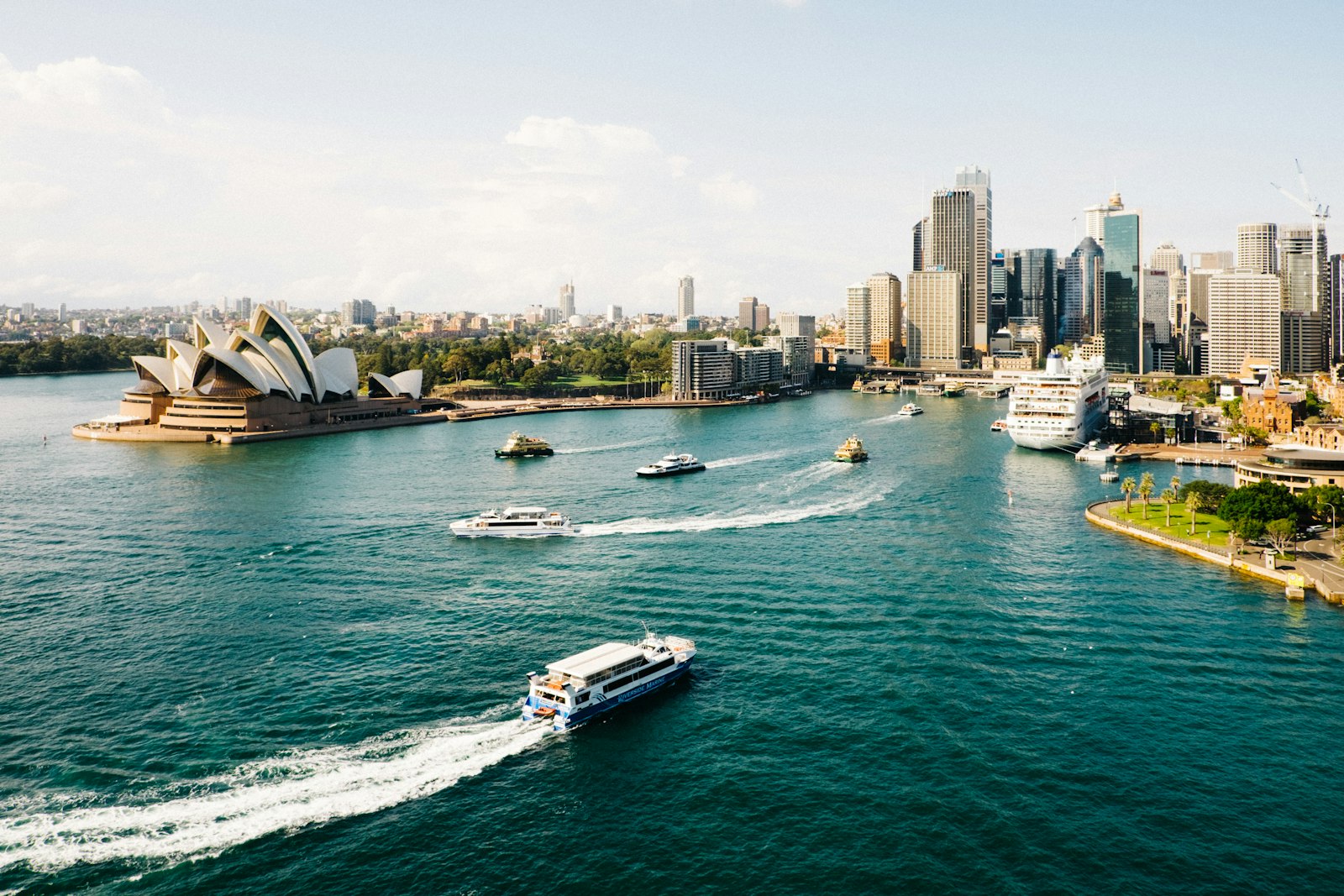
Cover photo via Unsplash.
Comments