Where to See Australian Wildlife in the Wild (Not in a Zoo)

You can hold a koala in a wildlife park in most Australian cities for A$40, and if that is what you want, go ahead. But the thing that stays with people is different: a mob of kangaroos on a beach at sunrise, a wombat grazing three metres from your tent, a platypus surfacing in a creek at dusk. Australia's animals are not hard to see in the wild if you know where and, just as importantly, when. Here is where.
Stralya is reader-supported. Some links in this guide go to booking partners and may earn us a small commission at no extra cost to you. We only link to things we would book ourselves.
The golden rule: dawn and dusk
Almost every Australian mammal is crepuscular or nocturnal. In the middle of the day they are asleep in the shade and you will see nothing. Be out an hour either side of sunrise or sunset and the same landscape is full of animals. This one fact is worth more than any location on this list.
Kangaroos and wallabies
Kangaroos are everywhere outside the cities and you will see them from the car in any rural area at dusk. For a guaranteed, close, photogenic encounter:
Cape Hillsborough, Queensland. Kangaroos and wallabies come down onto the beach at sunrise to eat seed pods washed up on the tide, and they do it every morning. An hour north of Mackay. It is the single most Australian photograph you will take.
Lucky Bay, Western Australia. Kangaroos lounging on one of the whitest beaches in the world, in Cape Le Grand National Park near Esperance. Remote, and worth it.
The Grampians, Victoria. Hundreds graze the oval and the town of Halls Gap at dusk. Three hours from Melbourne.
Murramarang National Park, NSW. Eastern greys on the beach at Pebbly Beach and Depot Beach, four hours south of Sydney.
Any golf course at dusk. Truly. Anglesea on the Great Ocean Road has hundreds.
Koalas
Harder than kangaroos, because they sleep 20 hours a day in the tops of trees and look like a knot of bark. Look for a grey lump in the fork of a eucalypt, and scan slowly.
Kennett River, Great Ocean Road. The most reliable wild koalas in the country, on Grey River Road just inland from the coast. See our Great Ocean Road guide.
Raymond Island, Victoria. A five-minute free ferry from Paynesville in the Gippsland Lakes and a signposted koala trail through the streets. Almost guaranteed.
Magnetic Island, Queensland. The Forts Walk from Horseshoe Bay passes wild koalas most days. Twenty minutes by ferry from Townsville.
Kangaroo Island, South Australia. A large population despite the 2020 fires; Flinders Chase and the Hanson Bay area.
You Yangs, Victoria. Forty-five minutes from Melbourne, a research population that the volunteers can usually point you to.
Quokkas
The small wallaby with the permanent grin lives almost only on Rottnest Island, a 30-minute ferry from Perth or Fremantle. There are about 10,000 of them and they are utterly unafraid of people, which is how the quokka selfie became a genre. Do not touch or feed them; they will come to you regardless. Hire a bike, ride the island, swim in the bays. Best in September to November, when the water is warming and the crowds have not arrived.
Wombats
Maria Island, Tasmania. A car-free national park island with the highest wombat density anywhere. They graze the grass around the old convict settlement in broad daylight and will walk straight past your boots. Ferry from Triabunna, an hour from Hobart.
Cradle Mountain, Tasmania. The boardwalks at Ronny Creek and the Enchanted Walk at dusk, reliably.
Kangaroo Valley and the Bendeela camping area, NSW. Two and a half hours from Sydney, wombats emerge onto the grass every evening.
Wilsons Promontory, Victoria. Around the Tidal River campground at dusk.
Platypus
Shy, small and mostly submerged, but findable. Sit very still on the bank of a slow creek at dawn or dusk and watch for a ring of ripples and a bill.
Eungella National Park, Queensland. Broken River viewing platforms, west of Mackay. The most reliable platypus in the country.
Yungaburra, Atherton Tablelands. Peterson Creek, a short walk from the village, an hour from Cairns.
Lake Elizabeth, Otways, Victoria. A guided dawn canoe paddle.
Bombala and the Snowy Mountains, NSW. Platypus reserve on the Bombala River.
Penguins
Little penguins, the world's smallest, nest in colonies along the southern coast and come ashore after dark.
Phillip Island, Victoria. The Penguin Parade is thousands of birds at dusk, with boardwalks and grandstands, 90 minutes from Melbourne. Commercial but genuinely moving. Book ahead.
Bicheno, Tasmania. Small-group guided tours to a rookery on the rocks. Far more intimate.
Bruny Island Neck, Tasmania. Free; sit on the boardwalk at dusk.
St Kilda Pier, Melbourne. A colony in the breakwater within sight of the city, free, every evening.
Penguin Island, Western Australia. South of Perth, September to November.
Crocodiles
Saltwater crocodiles live in every river, estuary and many beaches from Broome around the Top End to Rockhampton. They are the reason you do not swim in northern Australia unless a sign says you can. To see them safely:
Kakadu, Northern Territory. The Yellow Water cruise at dawn is the finest wildlife cruise in Australia: crocodiles, buffalo, jabiru, sea eagles and thousands of magpie geese in one wetland.
The Adelaide River, NT. The jumping crocodile cruises an hour from Darwin. Theatrical, and the crocodiles are enormous.
The Daintree River, Queensland. Small-boat cruises from an hour north of Port Douglas.
Cahills Crossing, Kakadu. A causeway where dozens of crocodiles gather at the turn of the tide. Watch from the viewing platform, not the road.
Whales, dolphins and the ocean giants
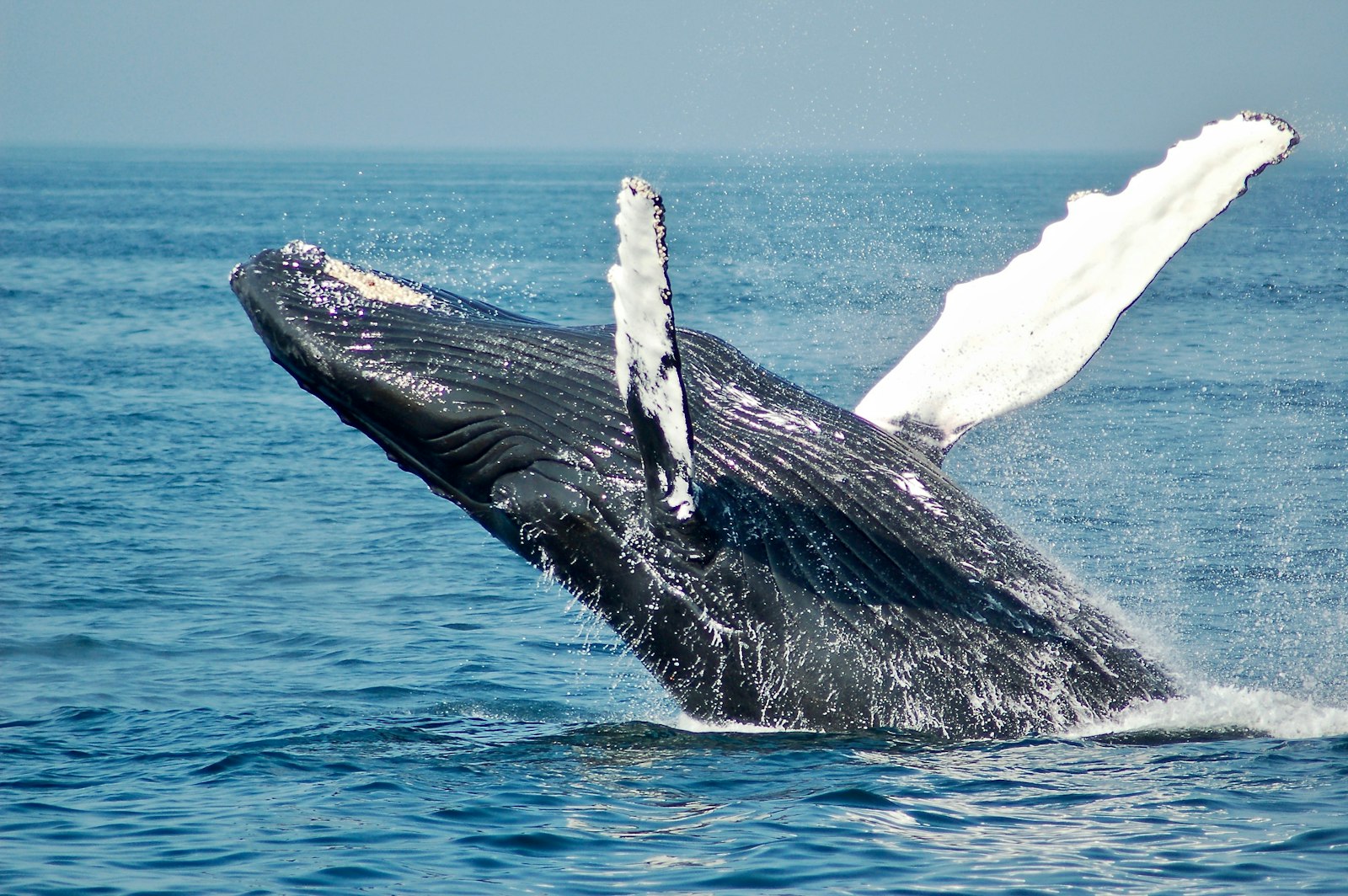
Humpback whales: May to November along the entire east coast, with Hervey Bay the best place in the world to see them from July to October. Our whale watching guide has the full calendar.
Whale sharks: Ningaloo Reef, Western Australia, from mid-March to July. You swim with them. Nothing else on this list compares.
Manta rays: Lady Elliot Island on the southern Great Barrier Reef, all year, best in winter.
Dolphins: Monkey Mia in Shark Bay, WA, where wild bottlenose dolphins visit the beach every morning. Also Port Stephens and Byron Bay in NSW.
Sea lions: Seal Bay on Kangaroo Island, where you walk among a colony of Australian sea lions on the beach with a ranger.
Southern right whales: Head of Bight, South Australia, and Logans Beach at Warrnambool, June to October, from cliff-top platforms.
The unexpected ones
Echidnas cross roads and paths anywhere in the bush in spring; Kangaroo Island and Tasmania are best.
Tasmanian devils are hard to see wild; the sanctuaries at Cradle Mountain and on the Tasman Peninsula do vital conservation work and are the honest option.
Cassowaries, the two-metre dinosaur-bird, roam the rainforest at Mission Beach and Etty Bay south of Cairns. Keep your distance.
Flying foxes stream out of city parks at dusk in Sydney, Brisbane and Cairns in their thousands.
Emus wander the Flinders Ranges, the Grampians and, memorably, the car park at Wilpena Pound.
Being a good visitor
Never feed wild animals. It kills them slowly and makes them dangerous quickly.
Keep your distance from kangaroos larger than you; a male eastern grey can disembowel a dog.
Drive slowly at dusk and dawn in the country. Roadkill is the biggest single killer of most of the animals on this page.
Take the red-eye flight home to see the sunrise kangaroos. It is worth it.
Every animal on this list is reachable on an ordinary holiday, with an ordinary hire car and an early alarm. The one thing they have in common is that they are not waiting for you at midday.
Cover photo via Unsplash.
Comments